If you run a truck in British Columbia, your vehicle has to carry the right lettering, and the rules are simpler than most people expect. The confusion usually comes from the NSC number itself, because many drivers think the number has to be shown on the truck. It does not. This article explains what B.C. actually requires, what NSC and GVW decals are for, and how to get your truck lettered correctly in Surrey.
THE NSC CORRECTION — READ THIS BEFORE SELLING ANY NSC JOB
Most sticker sites imply the NSC number is the thing that goes on the truck. In BC, it isn’t. The vehicle-marking rule is the carrier’s legal name, on both sides, in letters/figures at least 5 cm high, clearly visible. The NSC / safety-certificate number itself does not have to be displayed on the vehicle — it belongs on the vehicle registration and in ICBC/paperwork flows. A shop that prints only an NSC sticker and skips the 5 cm carrier name leaves the customer non-compliant.
Motor Vehicle Act Regulations, B.C. Reg. 26/58, Division 37 (Safety Code), s.37.14 (as substituted by B.C. Reg. 37/2023, effective 1 Aug 2023): “a carrier that holds a safety certificate must ensure that … the name of the carrier that holds the safety certificate for the vehicle is displayed on both sides of the vehicle (a) in one or both of letters and figures at least 5 cm high, and (b) in a manner that makes that name clearly visible to the public.”
Source: BClaws — Gazette text, B.C. Reg. 37/2023 (s.37.14). Older numbering: s.37.071, same wording.
CVSE says the same thing in plain English: “Make sure that each of the vehicles operating for you displays your NSC Safety
Certificate number on the vehicle registration. You must also display the name of the certificate holder on both sides of your vehicles.” — CVSE NSC course, Module 4. Mainland TTS (Surrey), citing the BC CVSE NSC Carrier Safety Guide: “The carrier’s name goes on both sides of a business vehicle, in letters at least 5 cm high. The NSC number itself doesn’t need to show.” — mainlandtts.com/compliance
What is an NSC number?
NSC stands for National Safety Code. In B.C., a carrier needs an NSC safety certificate for a truck or tractor over 5,000 kg licensed gross vehicle weight. The NSC number is the number on that certificate, and it belongs on the certificate, on the registration and on your ICBC paperwork. It is how the carrier is identified in the safety system.
The NSC number itself does not need to be displayed on the vehicle. That is the part most people get wrong. You may see trucks with an NSC number on the door, and there is nothing wrong with showing it, but the rule does not require it. What the rule does require is the carrier name, and that is where the lettering comes in.
The carrier name rule
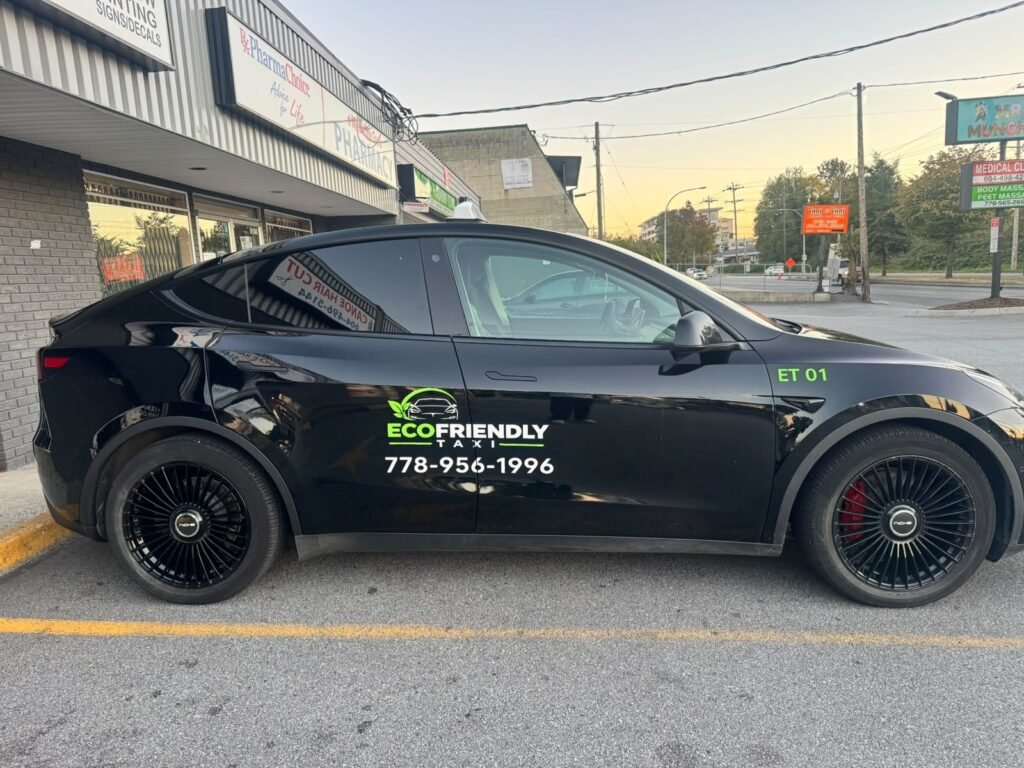
A B.C. carrier must display the carrier name on both sides of the business vehicle, in letters at least 5 cm tall. The name must be readable, so the lettering has to be large enough, clear enough, and placed where it can be seen.
This is the rule that enforcement officers check at the roadside. A name that is too small, faded, peeling, or only on one side does not meet it. A name that is spelled differently from the certificate, or that uses a trade name instead of the registered carrier name, can also cause problems. The name on the truck should match the name on the certificate, exactly.
If you are not sure which name to use, check your NSC certificate before you order lettering. The certificate is the source of truth.
NSC and GVW decals
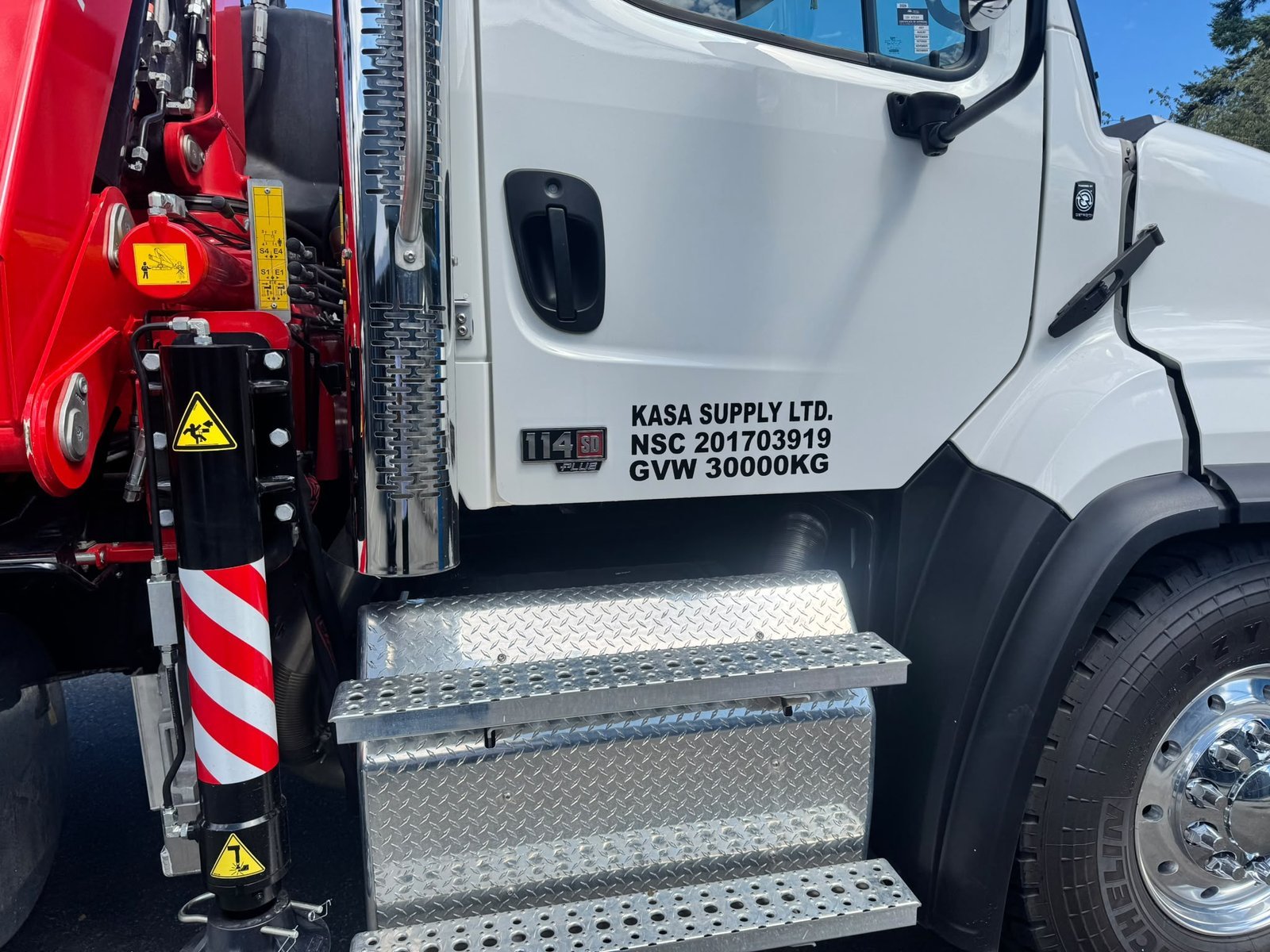
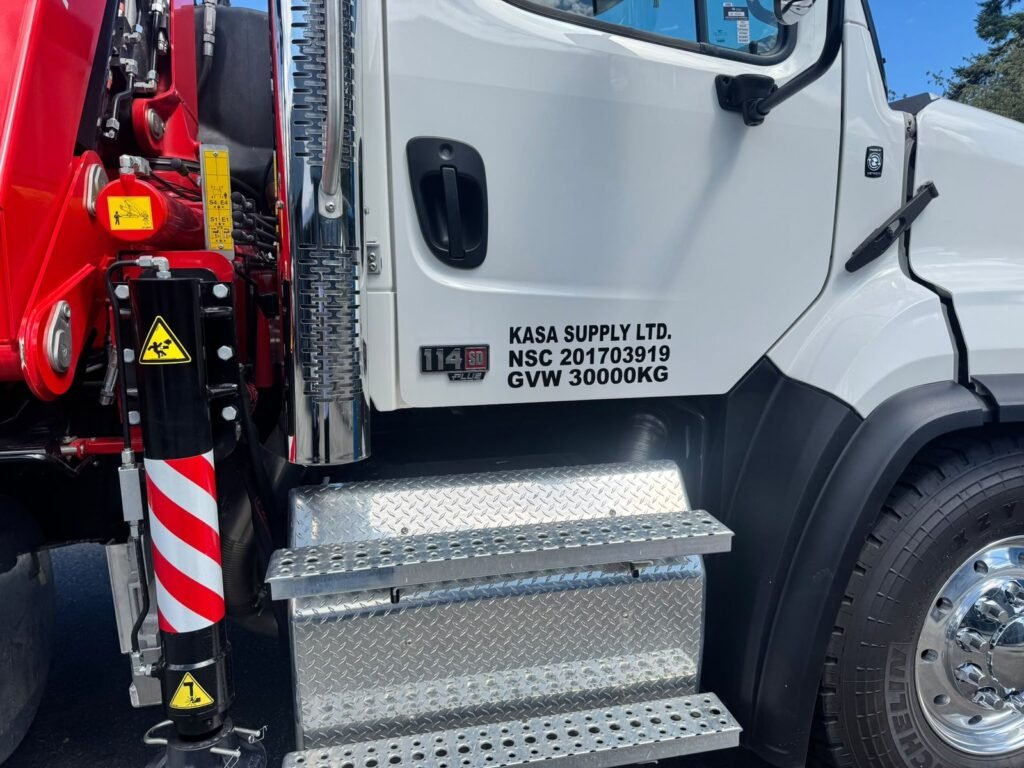
Alongside the carrier name, many trucks also carry NSC and GVW decals. GVW is gross vehicle weight, and the decal shows the licensed weight of the vehicle. These decals are small, but they matter, because they let an officer see the vehicle details without digging through paperwork.
Decals can be made for the doors, the cab, or the body of the truck, depending on where there is space and where they are easiest to read. They are usually cut from vinyl, so they last and they look like part of the truck rather than a sticker stuck on as an afterthought.
If your truck already has decals that are faded, cracked or peeling, they should be replaced. A decal that cannot be read is no better than no decal at all, and replacing one is a quick job compared with the time a roadside stop can take.
What good lettering looks like
Good truck lettering is not only about the rules. It is also about the truck looking professional. A clean, straight name on both doors, in a clear font, with the right spacing, tells a customer that the business is organised. A crooked or faded name does the opposite.
When we letter a truck, we proof the wording against your certificate before anything is cut. That means checking the spelling of the carrier name, the size of the letters, and the placement on the doors. The vinyl we use is made for commercial vehicles. It holds up to washing, sun and road grime, and it can be removed or replaced when the truck changes hands or the business changes its name. If you add a phone number, a website, or a logo to the doors as well, that turns a legal requirement into advertising that works every time the truck is on the road.
What to send to start
Starting a lettering job is simple. Send us clear photos of both sides of the truck, so we can see the doors, the cab and any existing lettering. Send us the exact wording you want, as it appears on your NSC certificate, and send us your artwork or logo file if you have one. Tell us the year, make and model of the truck, and whether you need only the carrier name or the full set, including NSC and GVW decals, a phone number, or a logo.
Small jobs and big jobs both start the same way. A single truck needing a name on two doors is a straightforward job. A fleet of trucks needing the same lettering on every vehicle is the same process, repeated with care so every truck matches. Either way, the lettering is proofed before it is cut, and it is installed by appointment at our shop in Surrey. Done right, the lettering meets the rule, looks professional, and advertises the business on every job.
Apna Customs, 9182 120 St, Surrey, call (778) 700-0193 or visit apnacustoms.com, by appointment only, Mon 10 to 6, Tue closed, Wed to Sun 10 to 6.