If you have ever searched for the price of ceramic window tint in Surrey, you have probably noticed that most shops do not publish one flat number. The cost depends on your vehicle and on exactly what you want tinted, so a fair price can only be given once those details are known. This article explains what affects the cost, how ceramic film differs from regular film, and how to get an accurate quote for your own car.
What affects the cost of ceramic tint
The size of your vehicle. A compact sedan has less glass than a large SUV or a pickup truck, and less glass means less film and less installation time. Larger vehicles with more windows, bigger rear glass and extra side windows take more material and more time, and that is reflected in the quote.
How many windows you want tinted. Some drivers want every rear window done. Others want only the rear side windows, or the rear window as well. A full rear job costs more than a partial one, because more windows are covered.
The film type. Ceramic film costs more than regular dyed film. That is because of how it is made. Tiny ceramic particles in the film block infrared heat while still letting visible light through, so the car can feel cooler at the same darkness. Regular dyed film mainly darkens the glass. It gives privacy and cuts brightness, but it blocks much less heat. You can read the full side by side comparison on our Ceramic vs Regular Tint page.
The shade you choose. VLT, or Visible Light Transmission, is the percentage of visible light that passes through the glass and film together. A lower number means a darker combination. Common choices are 5%, 20%, 35% and 70%. The shade itself does not usually change the price much, but it changes how the car looks and how much light comes in. Our 5% vs 20% vs 35% guide explains the trade offs in more detail.
Ceramic vs regular film, in short
Both films can make a car look darker and more private from the outside. The difference is what happens inside the car. Ceramic film is built to reject infrared heat, which is most of the heat you feel through a window. A lighter ceramic film can keep a car cooler than a darker regular film, because darkness and heat rejection are not the same thing.
Ceramic film also tends to keep its colour and clarity for longer, and it does not rely on metal, so it does not interfere with phone, GPS or radio signals. Regular film is the lower cost option, and it is a good choice when looks and privacy are the main goal and a big change in cabin heat is not expected. Ceramic is the higher performance option, and you pay more for heat rejection, UV protection and long term clarity.
We do not publish a heat rejection percentage for the film we install, because performance depends on the exact film chosen for your vehicle. Ask us for the specifications of the film you are considering before you book, and do not compare a percentage from another website with a film sold here.
What B.C. law allows
Under the Motor Vehicle Act Regulations, section 7.05, light reducing material is allowed on the top 75 mm of the windshield, on side windows behind the driver, and on the rear window if the vehicle has outside mirrors on both sides. Film is not listed for the front side windows. The regulation, as we checked it, sets no VLT percentage for aftermarket film. Our full BC Tint Laws page explains this in plain language, including why a percentage you see quoted online may not be a B.C. rule at all.
How to get an accurate quote
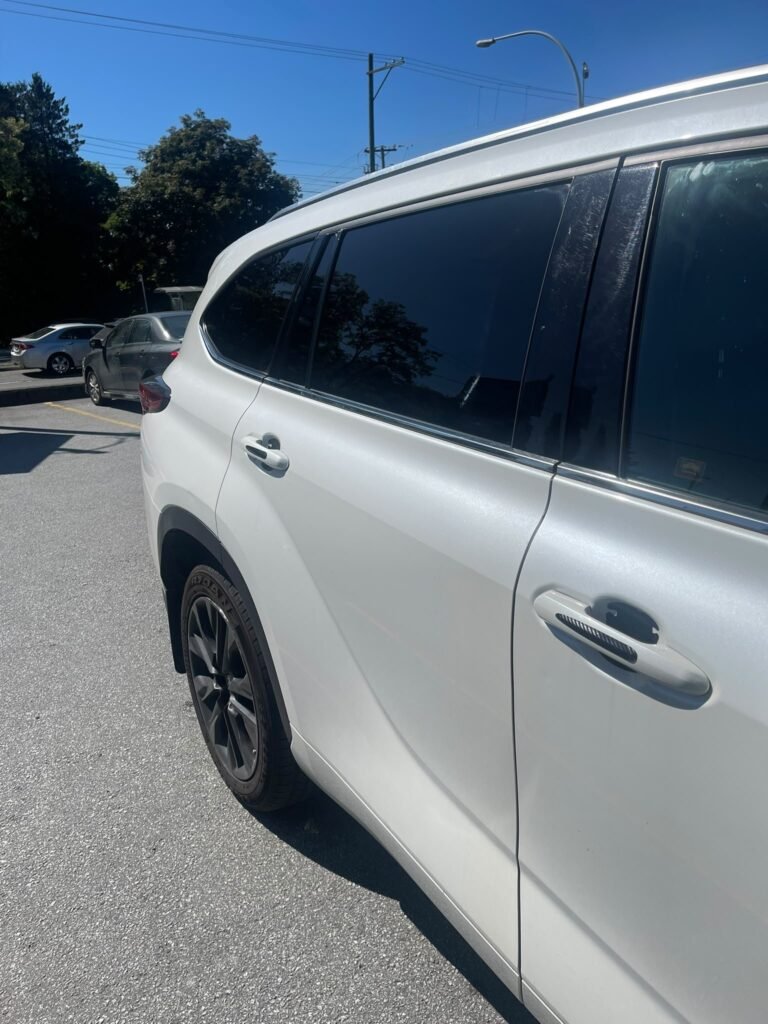
Because the price depends on your vehicle, the best way to get an accurate number is to send us the details. Tell us the year, make and model of your vehicle, which windows you want tinted, and whether you want ceramic or regular film. Photos of the car help too. With that information we can give you a quote for your exact vehicle, instead of a generic figure that may not apply to it. Every installation includes our lifetime warranty, subject to the documented terms for the film installed.
Is ceramic tint worth it?
That depends on how you use your car. If you park outdoors, drive in the sun a lot, or keep your car for years, the heat rejection and long term clarity of ceramic film are usually worth the extra cost. If you mainly want privacy and a darker look, regular film may be all you need. Film is hard to remove and redo, so a job done well the first time is almost always cheaper in the long run than a cheap job that needs replacing.
Apna Customs, 9182 120 St, Surrey, call (778) 700-0193 or visit apnacustoms.com, by appointment only, Mon 10 to 6, Tue closed, Wed to Sun 10 to 6.